First-Time Exhibitor Checklist for a Las Vegas Trade Show
Hit every deadline, skip the late fees, and show up to a booth that's actually ready.
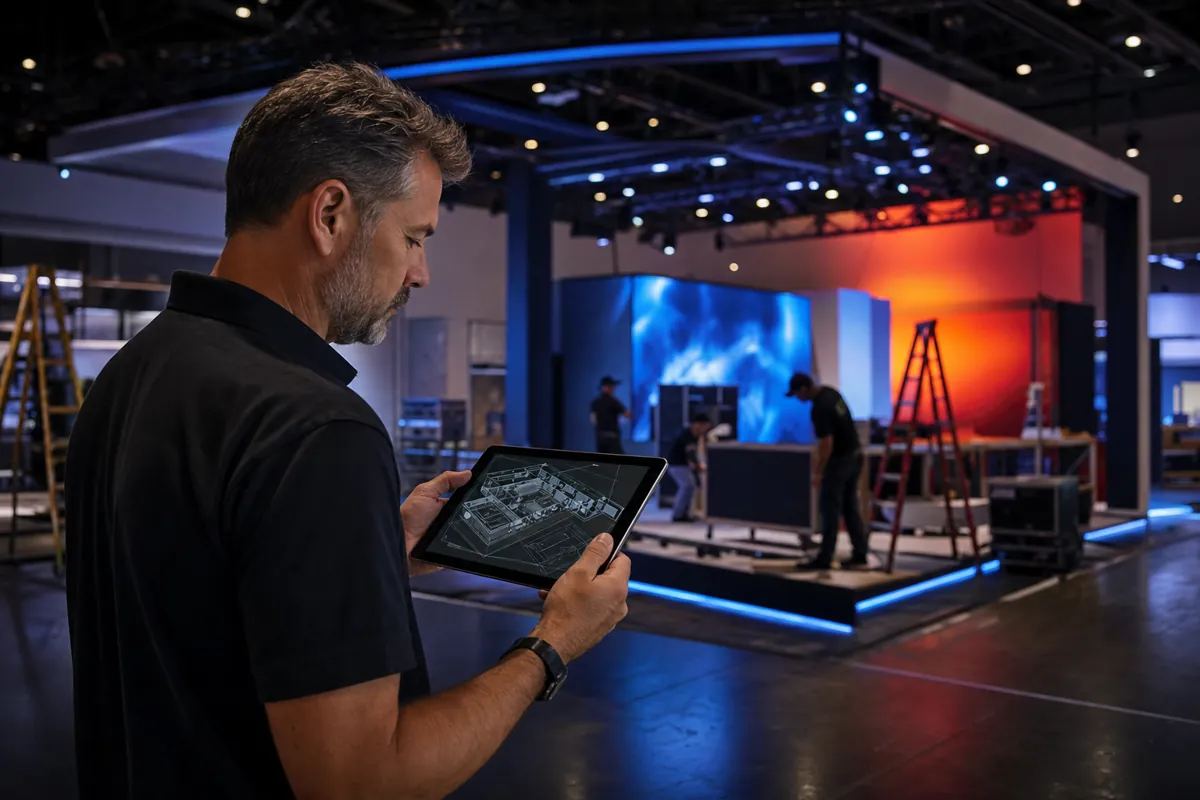
Your first Las Vegas trade show looks simple until the deadlines start stacking up. Electrical, drayage, labor, AV, freight — each has its own order form, its own advance-rate cutoff, and its own way of costing you more if you miss it. First-timers almost always discover this the hard way, paying late penalties or watching their booth sit half-built on day one.
This checklist walks you chronologically from the moment you sign your space contract to teardown, with the Vegas-specific traps called out along the way. Bookmark it, work it backward from your show dates, and you'll save real money.
- Read the exhibitor manual the day it drops and build a deadline spreadsheet from it.
- Order electrical, drayage, labor and AV before the advance-rate cutoff to avoid late fees.
- Plan freight to hit the advance warehouse window when it lowers your drayage cost.
- Start your booth design 4-6 months out so production and shipping have runway.
- Never tear down early, and turn in your outbound bill of lading to avoid force-shipped freight.
4-6 Months Out: Book Space and Start Design
The clock starts when you sign your exhibit space contract. Two things should happen immediately.
- Confirm your booth size, location and orientation. Note whether you have a corner, an island, or an inline space — it changes what you can build and how visitors approach you.
- Start your booth design now, not later. Custom fabrication and printed graphics need runway. A rushed design means rushed production and expensive expedited shipping.
If you're still deciding what to build, this is also the moment to figure out whether you're better off owning or renting your hardware. A property you'll use once is a very different decision than a booth you'll reuse across a season. Our buy or rent guide breaks down the math, and you can browse trade show booth options to see what fits your footprint.
Booking a custom booth design early gives production and shipping the time they need — and lets you see your booth before you commit a dollar.
3-4 Months Out: Read the Exhibitor Manual the Day It Drops
The exhibitor manual (also called the service kit) is the single most important document you'll get, and the most ignored by first-timers. The moment show management or the general contractor releases it, read it cover to cover.
Inside you'll find:
- Every advance-rate deadline for electrical, drayage, labor, internet and AV.
- The advance warehouse shipping window and address versus the show-site address.
- Booth construction rules — height limits, hanging sign rules, flooring requirements.
- Move-in and move-out schedules with your target dates and times.
Build a simple deadline spreadsheet from the manual. Note that exact prices and dates vary by show and year, so always confirm the current figures in your show's manual rather than trusting last year's numbers. Show pages like CES, World of Concrete and JCK Las Vegas can help you orient on each event, but the manual is your source of truth.
6-8 Weeks Out: Place Your Advance Orders
This is where the savings live. Nearly every service has a discounted advance rate that jumps once the deadline passes — sometimes by 20% to 40% or more. Order before the cutoff.
- Electrical. Calculate the total wattage of every screen, light and device, then order the right amperage. Specify exactly where in the booth the drops go — under carpet runs and 24-hour power both need to be flagged in advance.
- Labor. Decide whether you're using exhibitor-appointed or hall labor for install and dismantle, and reserve crews early. Las Vegas is a strong union-labor town, so understand who is allowed to do what before you arrive.
- AV and rigging. If you're hanging an LED video wall or a heavy sign, rigging and motors must be ordered and engineered ahead of time. Don't assume you can sort it on-site.
- Internet, lead retrieval and furnishings. All have advance rates too.
Order before the deadline even if a detail might change — it's almost always cheaper to adjust an existing order than to place a brand-new one at the late rate.
3-4 Weeks Out: Plan Freight to the Advance Warehouse
Drayage — the handling of your freight from the dock to your booth and back — is the cost that blindsides first-timers most. It's billed by weight (typically per hundred pounds, with minimums), and how you ship affects the rate.
- Ship to the advance warehouse when it lowers your cost. Many shows offer a lower drayage rate and guaranteed delivery to your booth for freight that arrives during the advance window — usually starting a few weeks before move-in. Hitting that window often beats shipping direct to show site.
- Know your free-storage and cutoff dates. Arrive too early or too late at the advance warehouse and you can incur storage or off-target fees.
- Label every piece with the official show shipping labels, your booth number and company name.
- Weigh and document your freight. Keep your bill of lading and certified weights — drayage disputes are won with paperwork.
Confirm the exact drayage rates, warehouse address and shipping window in your exhibitor manual; they change every year.
1 Week Out: Confirm Everything and Pack Smart
The week before the show is for confirmation, not new decisions.
- Reconfirm your electrical order, labor call times, AV delivery and freight tracking. Have order confirmations printed and saved on your phone.
- Pack a show survival kit: tape, zip ties, scissors, a power strip, screen cleaner, business cards, a tape measure, phone chargers and printed copies of all orders and the floor plan.
- Brief your team on move-in times, badge pickup and where to be on setup day. Build in buffer for Vegas traffic and the marshaling yard.
- Verify badges and access for everyone on the install crew and the show staff.
Show Day: Setup, Run, and the Vegas Pace
Arrive at the start of your move-in window, not the end. Convention centers like the LVCC and Mandalay Bay are enormous, and locating your freight, your labor crew and your service desks takes longer than you expect.
- Check in at the service desk first to confirm power is on and your orders are correct. Catch problems while there's still time to fix them.
- Inspect freight as it's spotted in your booth for damage before you start building.
- Keep your AV partner's contact handy. If you're running LED walls or lightboxes, a turnkey install team that knows the venue saves hours.
During the show, assign someone to monitor your tech each morning before doors open — a single loose data cable on an LED wall is the difference between a glowing booth and a dark one.
Teardown: Don't Lose Money on the Way Out
Teardown is where exhausted teams make expensive mistakes. Plan it as carefully as setup.
- Do not pack up early. Many shows penalize exhibitors who break down before the official close, and you'll miss last-day leads.
- Have your outbound bill of lading ready and turn it in at the service desk. Freight left without a completed BOL can get force-shipped at a premium to a default carrier.
- Schedule your return carrier and know the move-out deadline — material left past it can incur extra handling.
- Label and inventory every crate so nothing walks off and everything comes home.
If a turnkey partner handles your install and dismantle, this entire phase becomes their problem, not yours.
Frequently asked
What is drayage and why does it cost so much?
Drayage is the material handling that moves your freight from the loading dock to your booth and back out again. It's billed by weight with a minimum, and rates vary by show. Shipping to the advance warehouse within the discount window often lowers the cost — confirm the current rate and window in your exhibitor manual.
When should I place my electrical and labor orders?
As soon as your exhibitor manual is released, and always before the advance-rate deadline — typically several weeks before move-in. Ordering after the cutoff can raise your costs significantly. It's cheaper to adjust an early order than to place a new one at the late rate.
Can I set up my own booth in Las Vegas?
It depends on the show and the booth. Las Vegas has strong union-labor rules, and certain tasks — rigging, electrical, larger installs — may require hall or exhibitor-appointed labor. Check the labor section of your exhibitor manual before assuming you can build it yourself.
How early should I start my booth design?
Four to six months out is ideal. Custom fabrication, printed graphics and LED hardware all need production and shipping time. Starting early also lets you ship into the cheaper advance warehouse window instead of paying for rushed freight.
What happens if I miss an advance deadline?
You'll typically pay a higher floor or late rate for that service, and in some cases availability isn't guaranteed at all. Build a deadline spreadsheet from your manual the day it's released so nothing slips.
Do I need to read the whole exhibitor manual?
Yes. It contains every deadline, rate, shipping address, construction rule and move-in time specific to your show and year. It's the single document that prevents most first-timer mistakes — read it the moment it's available.
Keep going
Planning a Las Vegas booth?
Tell us your show — a free quote, usually same day.