How to Measure Trade Show ROI and Capture Leads
Stop guessing whether the show paid off — build a capture and attribution system before you ship the booth.
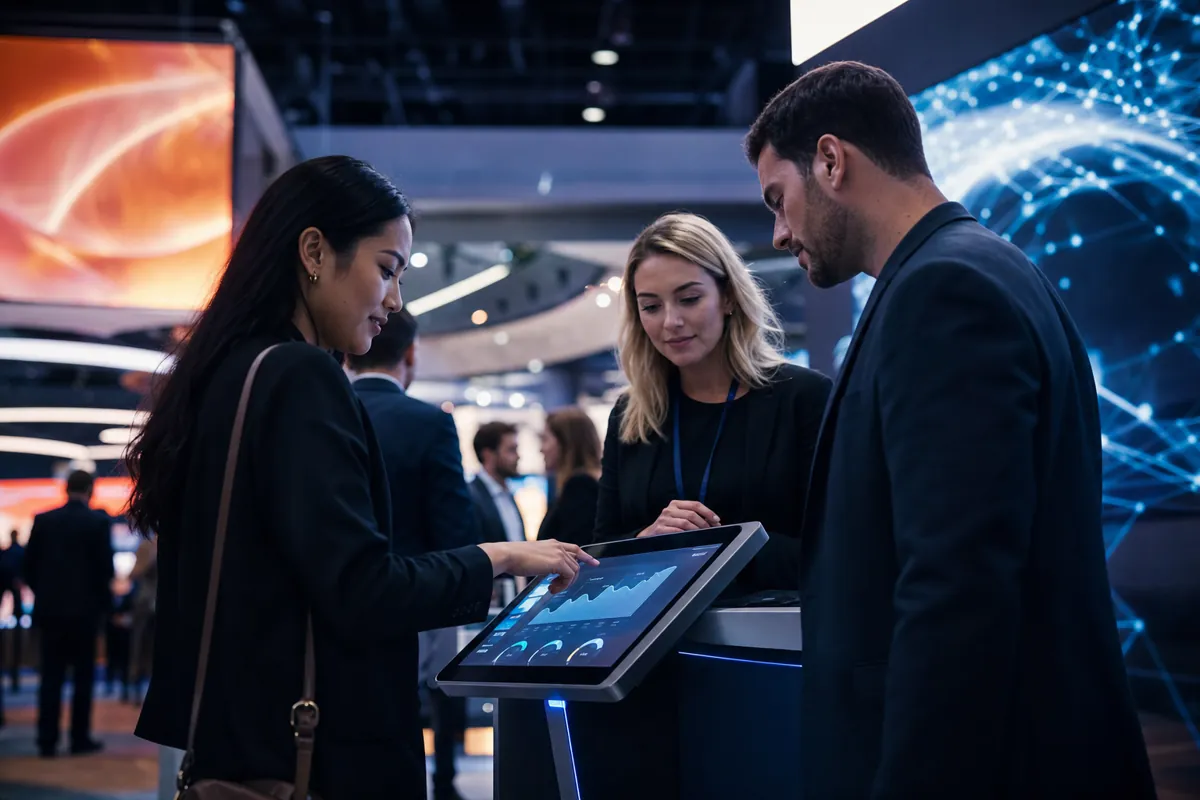
Most exhibitors leave a show with a stack of business cards, a vague sense it "went well," and no way to prove it to finance. Six months later, nobody can connect a single closed deal back to the booth — so the budget gets questioned.
ROI isn't a number you calculate after the show. It's a system you set up before it. Here's how to define success, capture every interaction, qualify on the floor, and follow up fast enough to actually convert — plus how your booth design quietly decides how many leads you get in the first place.
- Define one or two measurable goals — leads, meetings, pipeline, or reach — before you ship the booth.
- Capture every interaction with a badge scan or QR plus a context note; ditch the fishbowl.
- Qualify on the floor (A/B/C) so your list is sorted and routed before the show ends.
- Follow up within 24 hours — speed beats polish for conversion.
- Design for dwell time: motion and live demos create the reason to stop and scan.
Define what success means before you ship anything
You can't measure ROI against a goal you never set. Pick the one or two outcomes that actually matter for this show and write them down with a target number.
- Qualified leads — net-new contacts who fit your buyer profile and showed real intent.
- Meetings booked — scheduled conversations with named accounts, on-site or after.
- Pipeline influenced — dollar value of opportunities that touched the booth.
- Brand reach — impressions, demo views, social engagement (harder to monetize, but valid for launches).
Different shows justify different goals. A demand-gen play at CES looks nothing like a relationship-and-meetings play at MJBizCon. Set the goal first, then build the booth and the capture plan to serve it.
Capture every interaction — not cards in a fishbowl
The fishbowl is where leads go to die. You can't follow up on a name you can't read, attached to a conversation nobody remembers. Build a capture method into every touchpoint instead.
- Badge scans — rent the show's lead-retrieval app or scanners (check the exhibitor manual; cost varies by show and license count). Train every staffer to scan before the conversation ends.
- QR codes — put them on the booth, demo screens, and handouts that route to a short form or gated content.
- Demo and giveaway signups — gate the good stuff. Want the case study, the raffle entry, the live demo? Trade a contact for it.
The critical step most teams skip: capture context with the contact. Add a 10-second note or tag at the point of scan — what they asked about, which product, hot or cold. A name with context is a lead; a name alone is a guess.
Qualify on the floor so follow-up isn't a guessing game
Not every scan deserves the same follow-up. Build a simple, consistent qualification system your team can apply in seconds between conversations.
- Fit — do they match your buyer profile (role, company size, industry)?
- Intent — are they buying now, researching, or just collecting swag?
- Next step — demo, quote, intro to sales, or nurture?
A three-tier tag (A/B/C) works fine. Tier A gets a same-day human follow-up; tier C drops into an automated nurture sequence. The goal is that when the show ends, your list is already sorted and routed — not a 400-row spreadsheet someone has to triage on Monday.
Follow up fast — speed is the biggest conversion driver
This is the single highest-leverage thing you control, and it's where most exhibitors fail. Interest decays by the hour after a show. The exhibitor who emails a qualified lead that evening beats the one who waits until the following week — every time.
- Draft templates before the show — one per tier, personalized with the context note you captured.
- Set a hard SLA — tier A contacts get a reply within 24 hours, ideally same-day from the floor.
- Sync scans to your CRM nightly, not after you fly home.
- Assign owners on day one — every lead has a named person responsible for the next step before anyone packs up.
If you do nothing else from this article, do this. A mediocre follow-up done in 24 hours outperforms a perfect one done in two weeks.
Tie booth design to capture — give people a reason to stop
You can't capture a lead from someone who walks past. The booth's job is to interrupt the aisle, earn a pause, and create a natural reason to scan. Design and capture are the same system.
- Motion stops traffic. A bright, moving LED video wall running a tight 15–30 second loop pulls eyes from across the hall and gives staff an opener: "Want to see how this works?"
- Demos create the gate. A live product demo or interactive screen is the perfect place to ask for a scan before showing the good part.
- Even small booths can punch up. An LED poster at the aisle line adds bright, swappable motion to a 10x10 without the footprint of a full wall.
- Content should sell the next step — end demo loops with a QR code and a clear "scan to get the spec sheet" call to action.
Better dwell time means more conversations, more scans, and more context captured. That's the link between what you spend on the booth and the pipeline you can finally prove.
Do the math after the show
Now the number is easy because you set it up in advance. Pull your fully loaded show cost — space, booth, travel, shipping, staff time, lead-retrieval fees (confirm all rates in the show's exhibitor manual) — against your defined goal.
- Cost per qualified lead = total show cost ÷ qualified leads captured.
- Pipeline ROI = influenced pipeline value ÷ total show cost.
- Meeting conversion = meetings booked ÷ qualified conversations.
Track these across shows and you'll learn which events, which booth elements, and which staff actually drive return — so next year's budget is a decision, not a debate.
Frequently asked
What's the most common reason exhibitors can't prove ROI?
They never set a measurable goal before the show, and they capture leads loosely — business cards and memory instead of scans with context. Without a defined target and clean, attributed data, there's nothing concrete to measure against.
How fast should we follow up after a trade show?
As fast as possible. Speed of follow-up is the biggest driver of conversion. Qualified (tier A) leads should hear from a real person within 24 hours, ideally the same day. Draft your templates before the show so nothing slows you down.
Badge scanners or QR codes — which should we use?
Use both. Badge scanners (rented through the show) capture verified attendee data quickly during conversations; QR codes capture self-serve interest from people browsing demos or handouts. The key is adding a context note at the point of capture either way.
How does booth design actually affect lead capture?
You can only capture leads from people who stop. Motion and demos — like an LED video wall or LED poster running short, eye-catching content — interrupt the aisle and create a natural reason to start a conversation and ask for a scan. More dwell time means more captured leads.
How much does lead retrieval cost at a show?
It varies by show, license count, and whether you use the official app or a third-party tool. Always confirm current pricing and rules in that show's exhibitor manual before you budget.
Keep going
Planning a Las Vegas booth?
Tell us your show — a free quote, usually same day.