Shipping and Storing Your Booth Between Las Vegas Shows
The real cost of owning a booth isn't the build — it's everything that happens to it between shows.
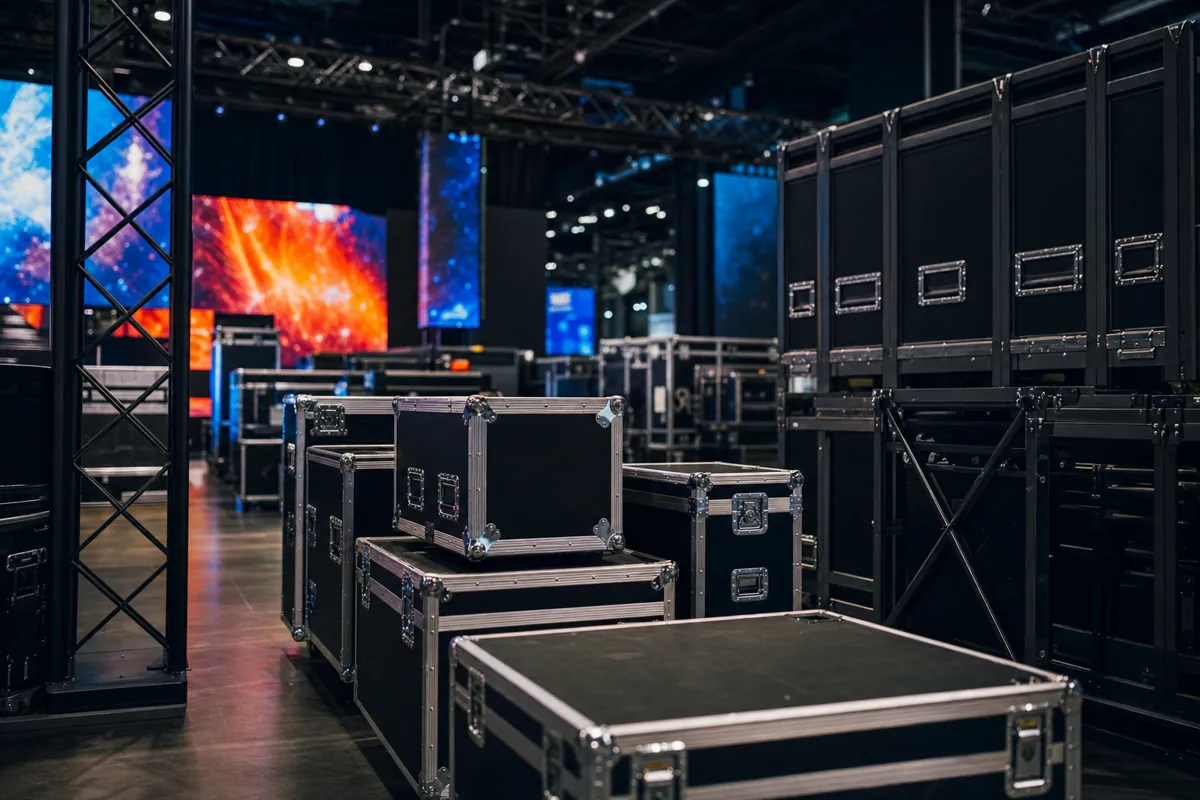
You bought a beautiful custom booth. Now it's sitting in a warehouse 2,000 miles from the next show it needs to attend, racking up storage fees and waiting for a freight quote that makes your eyes water. Sound familiar? For Las Vegas exhibitors, the booth itself is often the cheap part — it's the shipping, storage, drayage and repair cycle that quietly drains budgets year after year.
This guide breaks down how to protect your investment in transit, where to store it, how to choose freight, and the one move that eliminates storage and round-trip freight entirely for back-to-back Vegas shows.
- Damage, not freight, is the biggest hidden cost — proper road cases pay for themselves.
- For back-to-back Vegas shows, local storage beats paying cross-country freight twice.
- Advance warehouse receiving can smooth move-in and sometimes lower handling — confirm current rates in the exhibitor manual.
- Choose dedicated van freight over LTL for high-value LED to cut handling and damage risk.
- Renting locally eliminates storage, refurb and round-trip freight altogether.
Start with road cases — they pay for themselves
The single biggest controllable cost over a booth's life isn't freight — it's damage. Modular panels, LED tiles, light boxes and electronics get loaded, unloaded, stacked and forklifted dozens of times per year. Without proper protection, you'll be repairing or replacing components long before the design is dated.
Insist on road-case-ready kits for everything that travels:
- LED video wall tiles belong in foam-lined, dividered cases — never loose or shrink-wrapped on a pallet. A single cracked module can knock out a section of your wall on show morning.
- SEG lightbox frames and graphics ride best rolled or laid flat in dedicated cases so the tension fabric doesn't crease or snag.
- Modular hardware and connectors should have labeled, padded compartments so setup crews aren't hunting for parts.
Good cases also speed move-in and move-out, which directly reduces labor hours on the floor. Spend on cases up front and you spend far less on refurb and rush replacements later.
Local Las Vegas storage vs. shipping home
Here's the math most owners miss. If you exhibit at multiple Vegas shows — say World of Concrete in winter and PACK EXPO Las Vegas later in the year — shipping your booth back to your home state and then back to Las Vegas means you're paying cross-country freight twice just to end up in the same city.
Local Las Vegas storage eliminates that round trip. Your booth stays in town between shows, so the only "shipping" is a short local delivery to the convention center. For exhibitors with a heavy Vegas calendar, this often saves more in one year than the storage costs.
When evaluating storage, ask about:
- Climate control (heat is hard on adhesives, fabrics and electronics)
- Inventory tracking so you know exactly what's on hand before each show
- Whether the facility can also handle minor repairs, cleaning and graphic swaps between shows
How advance warehouse receiving works
Most major Las Vegas shows offer two ways to get your freight to the floor: ship direct to show site during move-in, or ship to the advance warehouse in the weeks before the show.
The advance warehouse route has real advantages:
- Your freight is received, checked in and waiting in your booth space when you arrive — no waiting in the marshalling yard during a chaotic move-in.
- Receiving windows are wider, so you're not boxed into a tight direct-to-site delivery slot.
- On some shows, advance warehouse handling carries a lower per-pound drayage rate than direct shipments — though this varies by show and can flip depending on weight and timing.
Drayage (material handling) is one of the most confusing and expensive line items at any show, and the rules change every year. Always confirm current advance warehouse deadlines, rates and weight rounding in that show's official exhibitor manual before you book freight — don't assume last year's numbers still apply.
Choosing your freight: LTL, dedicated van, or local
The right freight choice depends on your booth's size, value and timeline:
- LTL (less-than-truckload): Cheapest for smaller, well-cased shipments, but your freight shares a trailer and gets handled at multiple terminals — more touchpoints, more damage risk, less predictable timing.
- Dedicated/exclusive van: Your booth is the only thing on the truck. Costs more but means fewer handlers, tighter scheduling, and far less damage risk — usually worth it for LED walls and high-value custom builds.
- Local delivery: If your booth is stored in Las Vegas, this is just a short drive to the dock. The cheapest and lowest-risk option of all, which is exactly why local storage is so powerful for Vegas-heavy exhibitors.
Whatever you choose, build in buffer days. Hitting the advance warehouse early protects you from weather delays and traffic, and gives you time to react if something arrives damaged.
The option that removes storage entirely: renting locally
Owning a booth means owning every problem that comes with it — storage fees, refurb between shows, round-trip freight, and a depreciating asset that ages whether you use it or not.
Renting locally erases that entire list. When you rent your trade show booth, LED video wall or SEG lightbox from a Las Vegas partner, the gear lives here, gets refurbished and tested between shows by someone else, and arrives clean and current for your next event. No storage unit. No cross-country freight. No surprise repair bills.
This is especially smart if you:
- Only exhibit in Las Vegas a few times a year
- Want fresh LED or a new layout without buying all-new hardware
- Are tired of managing logistics that have nothing to do with selling
Not sure where you land? Our Buy or Rent breakdown walks through the trade-offs based on how often and where you exhibit — sometimes owning the structure but renting the LED is the sweet spot.
A simple between-shows checklist
- Inspect at teardown. Photograph and log any damage before it ships so repairs happen before the next show, not on the floor.
- Case everything properly. Confirm LED tiles, fabrics and hardware go back into the right protective cases.
- Decide store-local vs. ship-home based on your next show's location, not habit.
- Confirm advance warehouse deadlines and rates in the next show's exhibitor manual.
- Book freight early with buffer days, and choose dedicated transport for high-value LED.
- Schedule refurb and graphic updates during storage, not the week of the show.
Frequently asked
Is it cheaper to store my booth in Las Vegas or ship it home?
If you exhibit at multiple Las Vegas shows per year, local storage usually wins — you avoid paying cross-country freight twice just to return to the same city. If Vegas is a once-a-year stop, shipping home may make more sense. Run the numbers on annual freight versus storage fees.
What is the advance warehouse and should I use it?
It's a facility where shows accept freight in the weeks before move-in, then deliver it to your booth space. It often smooths move-in and can sometimes lower handling rates, but specifics vary by show. Always confirm current deadlines and rates in the official exhibitor manual.
How do I protect a rented or owned LED wall in transit?
Use foam-lined, dividered road cases made for LED tiles — never loose freight or shrink-wrapped pallets. Favor dedicated van freight over LTL to minimize handling touchpoints, and inspect every tile at delivery before move-in.
What's drayage and why does it cost so much?
Drayage (material handling) covers moving your freight from the dock or warehouse to your booth and back. It's priced by weight and rounded up, and rules change yearly. It surprises many exhibitors — always check the exhibitor manual for the current rate and weight rules.
Can I avoid storage and shipping completely?
Yes — by renting your booth, LED wall or SEG lightbox from a local Las Vegas partner. The gear stays in town, gets refurbished and tested between shows, and is delivered locally, removing storage, refurb and round-trip freight from your plate entirely.
Keep going
Planning a Las Vegas booth?
Tell us your show — a free quote, usually same day.