What Does a Trade Show Booth Actually Cost in Las Vegas?
Real numbers: all-in booth ranges by size, what our LED actually rents for, and how drayage, electrical and union labor are really billed in Las Vegas.
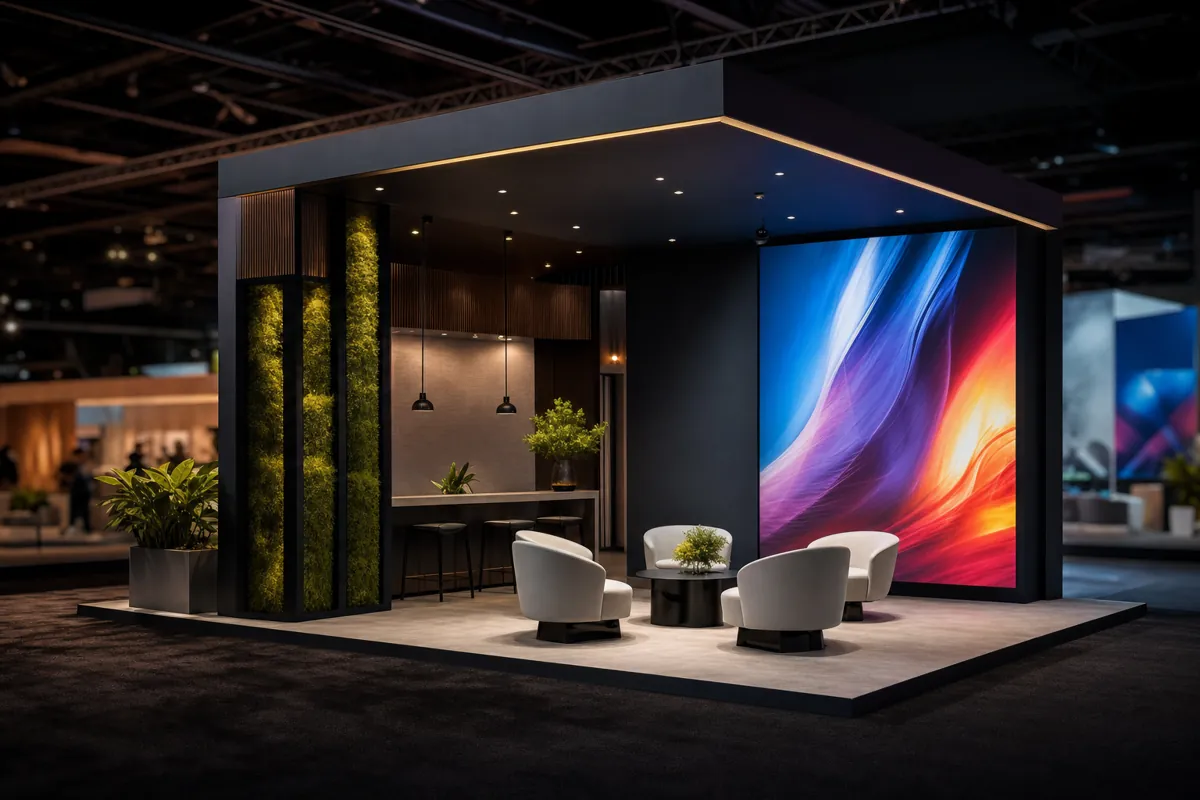
Ask three vendors what a Las Vegas booth costs and you'll get three wildly different numbers — because "a booth" isn't one line item. The price you pay is the sum of seven or eight separate costs, several of which you pay to the show itself, not to your booth builder. That's why generic "a 10x10 costs $X" claims are useless.
This guide breaks the total down into its real components, explains what drives each one up or down, and gives honest ranges by booth size and by rent versus buy. We won't quote fixed dollar figures as gospel — every show, every hall, and every scope is different, and the only reliable numbers come from the show's exhibitor manual and a real quote.
- All-in Las Vegas cost runs about $3,000-$9,000 for a 10x10 up to $60,000+ for a 30x30 island, excluding the booth space you buy from the show.
- Drayage is billed by weight per 100 lbs, round trip, with a minimum per shipment - so crate weight and consolidating shipments are budget decisions, not just logistics.
- Advance electrical pricing is typically 30-50% below floor pricing for the identical drop. The deadline is the price.
- Not everything is union: posters, lightboxes, backwalls and AV placement you can generally set up yourself. Rigging and hanging signs always need certified riggers.
- Design for hand assembly at floor level - no power tools, no ladders - and you control the largest variable line on the invoice.
The eight costs that make up your total
Whenever someone quotes you a single booth price, ask which of these it includes. A real all-in budget is the sum of:
- Booth space — the raw square footage you rent from the show organizer.
- Booth rental or build — the physical structure: walls, counters, hanging signs, flooring.
- Drayage (material handling) — the fee to move your crates from the dock to your space and back.
- Electrical and rigging — power drops, lighting circuits, and hanging points for overhead signs.
- Labor — union install and dismantle (I&D) crews.
- AV and LED — screens, LED video walls, monitors, players, and on-site techs.
- Graphics — large-format prints, SEG fabric, and backlit lightboxes.
- Shipping and storage — freight to Vegas, plus year-round storage if you own your booth.
Most budget surprises come from the four costs you pay to the show — space, drayage, electrical, and labor — because exhibitors mentally lump them into the "booth" number and they don't show up until later.
Booth space: what you pay the show
Space is sold per square foot and varies dramatically by show and by location on the floor. A corner or island commands a premium over an inline spot, and prime real estate near main entrances costs more than back corners. Bigger shows like CES and SEMA price differently than apparel events like MAGIC Las Vegas.
Space is also where booth size decisions begin. The common footprints:
- 10x10 inline — the entry point. One open side, back wall, limited height. Lowest space cost.
- 10x20 / 20x20 — more open sides, room for a meeting area and bigger graphics.
- 20x20 island and up — open on all four sides, which unlocks hanging signs and big LED, but also raises every other cost downstream.
Confirm the exact per-square-foot rate and any corner premiums in your show's official exhibitor manual — it's the only authoritative source.
The booth itself: rent vs. build
This is the line most people mean when they say "booth cost," and it's where size scales hardest. A clean 10x10 with SEG graphics is a modest spend; a 20x20 island with a custom structure, hanging sign, and integrated LED is several times that because you're adding more material, more engineering, and far more labor.
The bigger question is renting versus buying:
- Rent when you exhibit a few times a year, your design changes often, or you don't want to manage storage and refurb. Rental rolls the structure, prep, and turnaround into one show-specific fee — and there's nothing to warehouse afterward.
- Buy when you exhibit frequently with a consistent look. A custom build is a larger upfront cost, but spread over many shows the per-event cost drops below rental — as long as you account for storage and periodic refurbishment.
A useful rule of thumb: if you're doing fewer than three or four shows a year, or you're still iterating on your look, rent. Past that, run the math on ownership.
Drayage, electrical, and labor: the Vegas line items
These three land on a different invoice than your booth, and they are where Las Vegas budgets break. They are billed by the show's official contractor, not by your booth vendor, and they are the reason two identical booths can cost thousands apart.
Drayage is billed by weight, and round trip
Drayage (material handling) moves your freight from the dock to your space and back out again. It is billed per hundredweight (CWT) — per 100 lbs — almost always with a 200 lb minimum per shipment, and the published rate covers the round trip. Four things move the number:
- Crate weight. Billed by weight, not volume. A heavy custom build costs more to move than a modular rental of the same footprint, every single show.
- Advance warehouse vs. show site. Two different rates. Advance shipping is usually the cheaper and far safer option; direct-to-show-site can carry a surcharge and a narrow delivery window.
- Number of shipments. Each one carries its own minimum. Three small boxes arriving separately can be billed as three 200 lb minimums. Consolidate.
- Special handling. Uncrated, loose, or side-door deliveries carry a surcharge, often around a quarter to a third on top.
Rates are set per show by the official contractor and change every year, so we will not print a CWT figure here and pretend it applies to your show. Your exact rate is in the exhibitor service manual (the exhibitor kit) under Material Handling. That is the only number that governs your invoice — and it is published before you ship.
Electrical is ordered, and the deadline is the price
Power is ordered from the venue's electrical contractor by the amount you need and where it lands. The single largest controllable factor is when you order: advance-order pricing versus floor pricing is typically a jump of 30–50% for the exact same drop. Order after the deadline and you pay the penalty for nothing.
- Size the load before you order. An LED wall's draw is a real number your supplier can give you — ask for it in writing rather than guessing high and paying for amperage you never pull.
- Island booths usually need the drop under the floor, which means ordering before the carpet goes down. Miss that and the fix is disruptive.
Labor: what is union, and what you may do yourself
Las Vegas convention halls are union venues, and drayage is Teamsters Local 631. But "it's all union" is what most vendors tell you, and it is not accurate — a good deal is up to show management. Here is the honest split, from crews who work these halls:
- You can generally do yourself: LED posters, SEG lightboxes, portable backwalls, fabric displays, booth setup and dismantle within the rules, AV equipment placement, and ground-supported LED walls subject to show rules.
- Generally requires union labor: electrical connections beyond simple plug-in equipment.
- Always requires certified riggers: hanging signs, overhead rigging, and any ceiling-hung LED display.
The practical rule that saves the most money: no power tools and no ladders if your own staff is setting up. A booth designed to be hand-assembled at floor level is a booth you can install yourself. That single design decision moves labor more than any negotiation.
A cheaper spot at the back of the hall can cost more to install than a better one near the dock. Weigh placement against move-in, not just against booth-space price.
AV, LED, and graphics: where impact lives
Booth costs in Las Vegas are driven largely by your choices for graphics, AV, and LED.
Graphics include simple printed back walls, tension-fabric SEG, and backlit lightboxes.
Backlit reads more dramatically on a busy floor than flat print.
AV and LED cover setups from a single monitor to a full LED video wall.
LED pricing depends on panel pitch, total square footage, and whether you rent the wall with a processor and on-site tech.
Renting LED for the show is often preferable to owning panels that require transport, storage, and maintenance.
Spend this part of the budget intentionally, because a modest structure with one striking LED wall can outperform a large build with no motion or light.
What it actually costs, by booth size
Here are real all-in ranges for exhibiting in Las Vegas — booth, graphics, and the show services above, excluding the booth space you buy from the show organiser. Ranges are wide because custom fabrication and LED genuinely move the number; they are not wide to avoid answering.
| Booth size | Typical all-in | What that buys |
|---|---|---|
| 10x10 inline | $3,000 – $9,000 | Modular rental kit or banner stand, header sign, lighting, basic graphics. |
| 10x20 inline | $7,000 – $20,000 | Custom backwall, counter, a lightbox or a small LED wall. |
| 20x20 island | $18,000 – $45,000 | Open island, LED wall, hanging sign, demo stations. |
| 20x30 island | $30,000 – $70,000 | Larger island, significant LED, meeting space, storage. |
| 30x30+ island | $60,000 – $150,000+ | Showpiece island, double-deck options, large LED canvas. |
For a sanity check against the market: a competing Las Vegas exhibit house publicly advertises 20x20 rental booths at CES “starting at $22,000” — which sits inside the 20x20 band above. Where a quote lands within a range is driven by custom fabrication, LED area, and labor hours, in that order.
What our equipment actually rents for
Most cost guides stop at ranges because the company writing them is reselling somebody else's equipment and does not want to be held to a number. We own and install ours, so here is what it actually costs. These are our real rates, published in the same form we send them to buyers.
| Item | Buy | Rent per day | Setup & teardown |
|---|---|---|---|
| LED poster (2.3' x 6.5') | $3,200 + tax | $300 – $400 | $500 per poster |
| Tri-fold LED poster | $4,200 + tax | $400 – $500 | $600 |
| 3-sided LED tower (40" per side, 12' tall) | $35,000 | up to $6,500 | $1,800 |
| Curved LED panels | Quote on request | $200 – $250 per panel | Quoted with the build |
- LED posters join into walls. Each ships with a spare LED module, a DisplayPort cable and an HDMI cable; every five displays includes a spare receiver.
- The tri-fold runs double-sided, or opens flat to roughly 4' across and 6.5' tall.
- Tower panels build LED walls too, with the support bracket behind them.
- Everything ships in rolling flight cases — which matters directly for the drayage weight discussed above.
Terms: 50% deposit up front, the balance before shipping. Allow a 45-day lead time to build and assemble, longer for large orders — large orders can ship in stages as pieces are finished. Rush production and shipping is possible and carries a significant fee.
Frequently asked
What does a trade show booth actually cost in Las Vegas?
All-in, excluding the booth space you buy from the show: roughly $3,000-$9,000 for a 10x10, $7,000-$20,000 for a 10x20, $18,000-$45,000 for a 20x20 island, and $60,000+ for a 30x30 showpiece. Two booths the same size can differ two to three times over depending on custom fabrication, how much LED you use, and labor hours.
How much does it cost to rent an LED wall for a Las Vegas trade show?
Our LED posters rent for $300-$400 a day with a $500 setup and teardown fee per poster, tri-folds $400-$500 a day, and a three-sided 12-foot LED tower up to $6,500 a day with an $1,800 setup and teardown fee. Curved panels run $200-$250 per panel per day. Posters and tower panels can also be combined into a larger wall.
What is drayage and how is it calculated?
Drayage is material handling: moving your freight from the dock to your booth space and back. It is billed per hundredweight (per 100 lbs), typically with a 200 lb minimum per shipment, and covers the round trip. Weight, the number of separate shipments, whether you ship to the advance warehouse or direct to show site, and any special handling all change it. Your exact rate is in the exhibitor service manual for your show.
Do I have to use union labor to set up my booth in Las Vegas?
Not for everything, and most vendors overstate this. It is largely up to show management, but as a rule you can set up LED posters, SEG lightboxes, portable backwalls, fabric displays and AV placement yourself. Electrical beyond simple plug-in equipment generally needs union electricians, and anything hanging or ceiling-mounted requires certified riggers. If your own staff sets up, the working limit is no power tools and no ladders.
How far in advance do I need to order?
Allow 45 days to build and assemble equipment, longer for large orders. The deadlines that cost real money are earlier than people expect: advance electrical pricing is typically 30-50% cheaper than ordering on the floor, and island booths usually need their power drop placed before the carpet goes down.
Is renting or buying cheaper?
Renting is cheaper for one or two shows a year and carries no storage or refurbishment cost. Buying starts to pay off at roughly three or more shows a year with a stable booth design. An LED poster is $3,200 to buy against $300-$400 a day to rent, so the crossover comes fast on equipment you use repeatedly - but a bought booth still costs you drayage, storage and repair between shows.
Keep going
Planning a Las Vegas booth?
Tell us your show — a free quote, usually same day.