Trade Show Booth Sizes Explained: 10x10 to 40x40
What actually fits in each booth size, plus the rules and costs nobody explains until you've already signed the contract.
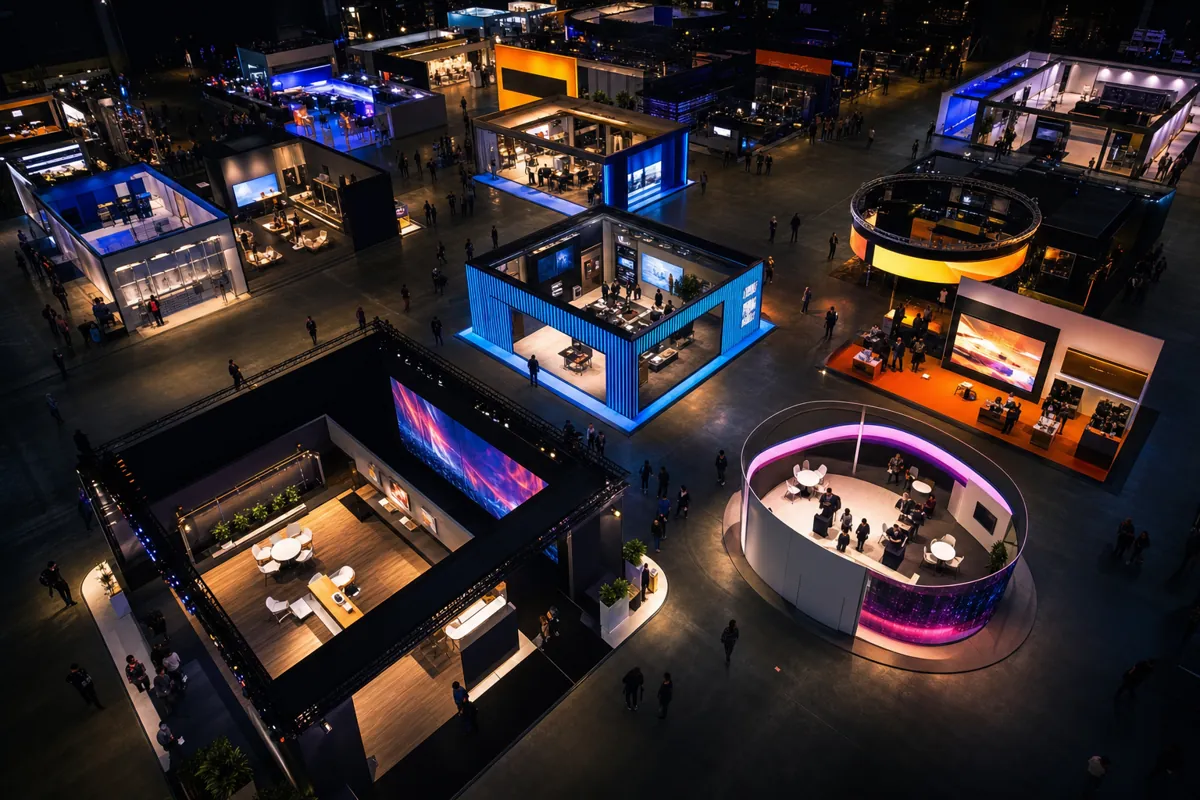
Booking floor space is the first big decision you make as an exhibitor, and it quietly shapes everything that follows: your budget, your booth design, your labor bill, even whether you can hang a sign overhead. Most exhibitors pick a size based on a number on the floor plan without knowing what it realistically holds.
This guide walks through the common sizes — 10x10, 10x20, 20x20, 20x30, 30x30 and 40x40 — and the three booth types (inline, peninsula, island). We'll cover what fits, how size changes the rules, and how to match square footage to your actual goals instead of overbuying.
- Pick your booth type (inline, peninsula or island) before square footage — it controls sightlines, height limits and most rules.
- A 10x10 is built for brand presence and lead capture; expect meeting rooms and demos only at 20x20 islands and up.
- Drayage, labor and rigging all scale with size, so a bigger booth costs more than just the extra space rental.
- Match size to your goal first, then sanity-check the budget, and always confirm exact rules and rates in the show's exhibitor manual.
- Start with a custom design to see what really fits before you sign the contract.
The three booth types (and why they matter more than size)
Before square footage, understand orientation, because it controls your sightlines and most of the rules.
- Inline (linear): Backs up to a wall with neighbors on both sides. You only have one face to work with — the aisle in front. The 10x10 and 10x20 are almost always inline.
- Peninsula: Open on three sides, with one back wall shared with another booth (or the aisle). You get corner exposure and far better visibility.
- Island: Open on all four sides with aisles all around. Maximum visibility, maximum design freedom — and the most rules and labor.
Most show organizers set height limits by type. Inline booths are typically capped around 8 ft (with back-wall-only height in the rear and lower limits up front), while islands often allow much taller structures and overhead hanging signs. Always confirm exact height limits, setback rules and line-of-sight restrictions in the show's exhibitor manual — they vary by show and even by hall.
10x10: the starter booth
At 100 square feet, the 10x10 is the workhorse of first-time and small exhibitors. It's inline, so you're designing one back wall plus a small footprint.
What realistically fits: a backlit SEG fabric backwall or LED poster, a counter or small reception desk, one or two literature racks, and standing room for one or two staff to greet attendees. That's about it — don't plan a seated meeting area or a large demo here.
Best for: brand awareness, lead capture, and conversations on your feet. Because the load-in weight is low, a 10x10 is often the only size you can self-install without union labor (rules depend on the show and city). Drayage and labor stay minimal, which is why this is the budget-friendly entry point.
10x20: room to breathe
Double the space (200 sq ft) and still inline. The 10x20 is where you can finally separate functions instead of cramming everything onto one wall.
What realistically fits: a full graphic backwall with a product display or demo station on one side and a semi-private chat area or counter on the other. There's room for a modest LED video wall as a backdrop and two to four staff working comfortably.
Best for: exhibitors who need both presence and a place to talk. You'll likely cross into installation labor and heavier drayage at this size, so factor that into the budget early.
20x20: your first island
At 400 sq ft, the 20x20 is the smallest true island — open on all four sides. This is a major jump, not just in size but in design thinking, because attendees approach from every direction and there's no "back" to hide cables and storage.
What realistically fits: a central tower or hanging sign for visibility across the hall, two or three demo or product zones, a small closet for storage, and a casual meeting spot. Four-sided access roughly doubles your engagement opportunities versus a same-square-footage inline.
Best for: brands ready to command attention. Expect height allowances for taller structures and overhead signs, which means rigging and electrical work — and the labor bill that comes with it.
20x30 and 30x30: the mid-size island sweet spot
At 600 to 900 sq ft, these sizes let you build a genuine destination. You can dedicate real estate to distinct activities instead of compromising.
What realistically fits: a large overhead hanging sign or LED ceiling element, multiple demo pods, a private or semi-private meeting room, a hospitality or coffee bar, a storage room, and an immersive LED video wall as a centerpiece. Staff of six to ten works comfortably.
Best for: companies running scheduled meetings, product launches and live demos at the same time. This is common for serious exhibitors at shows like CES or the International Builders' Show, where you're competing with elaborate neighbors. Budget seriously for rigging, electrical, drayage and multi-day install labor.
40x40 and up: the brand statement
At 1,600 sq ft, a 40x40 island is a small architectural project. It's a destination you can see from across the hall, often with double-deck options where permitted.
What realistically fits: multiple enclosed meeting rooms, a presentation theater or stage, large-format LED walls, several demo stations, a full hospitality area, and dedicated storage. This is where towering structures, ceiling rigging and large hanging signs become standard.
Best for: market leaders and companies whose presence itself is the message. Plan for the longest install windows, the largest crews, and the highest drayage and rigging costs of any size. Nothing about a 40x40 is turnkey-out-of-a-box — it needs real design and project management.
How size changes cost, rules and install
Beyond the rental, three hidden cost drivers scale with size:
- Drayage: Material handling is usually charged by weight (often per hundredweight). Bigger booths ship heavier, so a larger structure costs more to move from the dock to your space — every time.
- Labor: Larger and taller booths take longer to build and frequently require union labor, electricians and riggers depending on the city and show. Self-install is generally only realistic for the smallest inline booths.
- Rigging and electrical: Hanging signs, overhead lighting and big LED walls trigger rigging and higher power orders — both ordered (and paid for) through the show.
Confirm exact drayage rates, labor rules and power pricing in the official exhibitor manual. We won't quote dollar figures here because they shift by show, year and hall — but the pattern is consistent: every step up in size multiplies these line items, not just the booth itself.
How to actually pick your size
Start with your goal, then work backward to square footage:
- Pure brand presence / lead capture: 10x10 or 10x20 inline does the job for most.
- Product display plus conversations: 10x20 inline or a 20x20 island if you want four-sided traffic.
- Live demos and scheduled meetings together: 20x20 to 30x30 island.
- Launches, theater, hospitality and dominance: 30x30 to 40x40 island.
Then sanity-check against budget, knowing labor and drayage scale alongside the footprint. The smartest move is to start with a custom booth design so you can see exactly what fits before you commit — it's far cheaper to resize on screen than on the show floor.
Frequently asked
What's the difference between inline, peninsula and island booths?
An inline booth backs to a wall with neighbors on both sides and one open aisle face. A peninsula opens on three sides with one shared back. An island is open on all four sides. More open sides means more visibility, more design freedom, and usually more rules and labor.
Can I install my own booth?
Self-install is generally only realistic for small inline booths like a 10x10, and even then it depends on the show's and city's labor rules. Larger and taller booths typically require union labor, electricians and riggers. Always check the exhibitor manual for your specific show.
How does booth size affect my total cost?
Beyond the space rental, size drives drayage (charged by weight), install labor (more hours and often union crews), and rigging/electrical for hanging signs and LED walls. Each step up in size multiplies these hidden line items. Confirm exact rates in the show's exhibitor manual.
When can I hang a sign over my booth?
Overhead hanging signs are usually only allowed for island booths, with height and setback limits that vary by show. They trigger rigging labor ordered through the show. Inline and peninsula booths typically can't hang signs — verify the rules in your exhibitor manual.
What size booth do I need for meetings and demos?
For both at once, a 20x20 to 30x30 island gives you room for demo pods plus a semi-private meeting area and storage. A 10x20 inline can handle one or the other comfortably, but not multiple simultaneous activities.
Keep going
Planning a Las Vegas booth?
Tell us your show — a free quote, usually same day.