Union Labor Rules at the Las Vegas Convention Center
The LVCC leans union, but how much you can do yourself is largely up to each show's rules — here's what you (or your display partner) can typically set up without union labor, and where union trades are genuinely required.
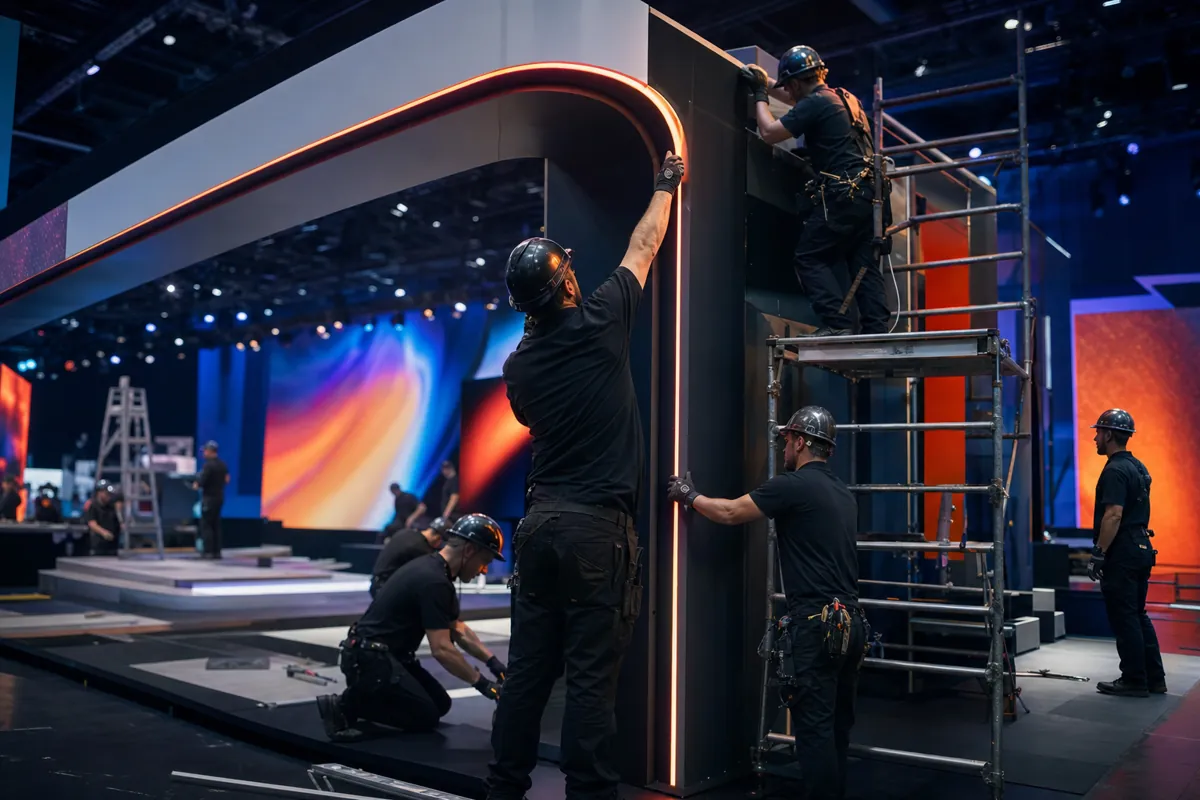
One of the most common questions for exhibitors at the Las Vegas Convention Center (LVCC) is labor: what can my own team set up, and what has to go through union trades? It's a fair question, because forklifting your crate is Teamster jurisdiction, hard-wiring power is electrical, and hanging a sign from the ceiling is rigging — separate trades, separate orders, and overtime if you miss the window.
The good news: it's not all locked up. How much you can do yourself is largely up to each show's management, and a surprising amount of modern display work — LED posters, SEG lightboxes, portable backwalls, fabric displays, and even ground-supported LED walls — falls outside union jurisdiction. This guide lays out what you (or your display partner) can typically set up without union labor, where union trades are genuinely required (electrical and overhead rigging), the right-to-work nuance, and how to budget install and dismantle (I&D) so nothing blindsides you.
- How much you can do yourself is largely up to each show's management — a lot of display work (LED posters, SEG lightboxes, backwalls, fabric, ground-supported LED, booth set/dismantle, AV placement) can typically go up without union labor.
- The real union lines: electrical beyond simple plug-in needs union electricians, and any hanging sign, overhead rigging, or ceiling-hung LED needs approved riggers.
- Nevada is right-to-work, but that governs employment, not show-floor jurisdiction — it doesn't let you skip labor that a show does require.
- You can often self-install a small booth (~under 300 sq ft) with no tools, your own employees, and a ~30-minute setup — confirm limits in the manual.
- Material handling is Teamsters; electrical, rigging, and hanging signs are separate trades with separate orders and deadlines.
- Budget straight time vs. overtime, order before deadlines, and account for drayage both in and out.
- For anything beyond a small pop-up, a turnkey partner usually pays for itself by preventing labor missteps and overtime.
What You (or Vivid Displays) Can Typically Set Up Without Union Labor
Here's the part most exhibitors miss: a lot of modern display work falls outside union jurisdiction, and how much you can do yourself is largely up to each show's management — so the exhibitor manual is always the final word. That said, these are the jobs Vivid Displays (or your own full-time team) can typically handle at the LVCC without hiring union labor:
- ✅ LED posters
- ✅ SEG lightboxes
- ✅ Portable backwalls
- ✅ Fabric displays
- ✅ Ground-supported LED walls (subject to show rules)
- ✅ Booth setup and dismantle
- ✅ AV equipment placement
And the lines you generally can't cross on your own:
- ⚠️ Electrical: connections beyond simple plug-in equipment generally require union electricians.
- ❌ Hanging signs and overhead rigging require approved riggers.
- ❌ Ceiling-hung LED displays require rigging labor.
In short: most of what makes a booth look great — posters, lightboxes, backwalls, fabric, and ground-supported LED — can usually go up without union crews, while anything that draws hard power or hangs from the ceiling is union work. When in doubt, confirm with the show's exhibitor services. (Vivid Displays' own LED posters, SEG lightboxes, and portable booths are built to set up fast and stay on the right side of these rules.)
"Right-to-Work" Doesn't Mean "Set Up Your Own Booth"
Nevada is a right-to-work state, which means no worker can be forced to join a union as a condition of employment. Many exhibitors hear this and assume it means union labor rules don't apply on the show floor. That's a costly misunderstanding.
Right-to-work governs employment, not show-floor jurisdiction. The unions that service the LVCC have negotiated jurisdiction over specific categories of work — material handling, electrical, rigging, and more — and that jurisdiction applies regardless of Nevada's labor laws. When you exhibit at a major show, you agree to the show's labor rules as a condition of participating.
So the real question isn't "do I have to use a union?" It's "which tasks fall under union jurisdiction, and which can my own team legally perform?"
The Small-Booth Self-Setup Allowance
Most shows carve out an exception that lets exhibitors build their own booth without hired labor — but only when all of these conditions are met (thresholds vary by show, so confirm in your exhibitor manual):
- Size: The booth is small — commonly under roughly 300 square feet (think a 10x10, 10x20, or 10x30).
- No tools or ladders: Assembly requires only hand-tightening, pop-up frames, or similar tool-free setup. Power tools and ladders typically trigger labor jurisdiction.
- Time: The work can be completed by your team in about 30 minutes or less.
- Your own people: The work is done by full-time employees of your company — not temps, contractors, or third parties you bring in.
If you exceed any of these limits — a bigger footprint, a build that needs tools, or a job that takes longer — you'll need to order labor through the official service contractor. The smartest move is to design within these limits if you want to self-install, or plan for labor from day one if your booth is larger. Our pop-up and modular trade show booths are engineered to fall inside these tool-free, fast-setup parameters whenever possible.
Who Handles What: Teamsters vs. the Other Trades
Even small booths usually touch more than one trade. Here's the breakdown of how work is typically divided at the LVCC:
- Material handling (Teamsters): Forklifts, pallet jacks, and moving freight from the dock to your space — and back out at the end — is Teamster work. This is "drayage," and it's almost always required if your booth ships in crates or on pallets. Hand-carrying small items you can manage yourself (one person, no wheeled equipment) is often allowed; check the manual for the exact limits.
- Electrical: Anything beyond plugging into a standard outlet — running power under carpet, wiring lighting, distributing power across a large booth — is electrical jurisdiction, ordered through the venue's electrical provider.
- Rigging and hanging signs: Any sign or structure suspended from the ceiling is rigging work, and it's its own separate order with its own lead times and approval requirements.
- Carpenters / I&D labor: Larger booth assembly that requires tools, ladders, or more than the self-setup window falls to install-and-dismantle labor.
The key takeaway: these are separate orders with separate deadlines. You can't bundle them into one line item, and missing a trade's order deadline usually means paying a higher floor rate on-site.
How to Budget I&D Without Surprises
Labor is where budgets go sideways. Use this framework so you're not guessing:
- Start with the exhibitor manual. Every show publishes labor rates, jurisdiction rules, and deadlines. This is the single source of truth — rates and thresholds differ from show to show, so never assume last year's numbers or another show's rules apply.
- Know straight time vs. overtime. Labor billed during standard weekday hours costs significantly less than evenings, weekends, and holidays. Build your install schedule to land inside straight-time windows wherever possible.
- Account for the supervision model. You can typically choose exhibitor-supervised labor (you direct the crew, often cheaper but requires your presence) or contractor-supervised (they manage it without you, convenient but priced higher).
- Budget material handling separately. Drayage is usually charged by weight (per hundredweight, or "CWT") with a minimum. Don't forget it applies both in and out.
- Add a buffer. Freight that arrives late, a missed deadline, or an extra hour on the floor can push you into higher rates. Confirm exact figures in your show's manual and pad your estimate.
Because Las Vegas hosts massive shows with tight schedules — CES, NAB Show, and ISC West among them — labor demand peaks during move-in and move-out, which is exactly when overtime and delays are most likely.
Why a Turnkey Partner Often Pays for Itself
If your booth is anything more than a small pop-up, coordinating multiple trades, ordering each by its deadline, and supervising on-site is a real job. Get it wrong and you eat overtime, refused-work charges, or a booth that isn't ready for opening.
A turnkey partner handles the I&D end to end: freight, material handling, assembly, electrical coordination, and dismantle. That means one point of contact who already knows the LVCC's jurisdictions, deadlines, and rate windows — so you avoid the missteps that catch first-timers. For larger or custom builds, this is usually the difference between a smooth show and a stressful, over-budget one. Our installs across major Las Vegas shows are turnkey by default, so the labor logistics are handled before you ever land at McCarran.
Frequently asked
What can Vivid Displays set up at the LVCC without union labor?
Typically LED posters, SEG lightboxes, portable backwalls, fabric displays, ground-supported LED walls (subject to show rules), booth setup and dismantle, and AV equipment placement. Electrical beyond simple plug-in generally requires union electricians, and any hanging sign, overhead rigging, or ceiling-hung LED requires approved riggers. It's largely up to each show's management, so we confirm the rules in the exhibitor manual for your specific show.
Can I really set up my own booth at the LVCC?
Often yes, if it's small (commonly under ~300 sq ft), needs no tools or ladders, is built by your own full-time employees, and takes about 30 minutes or less. If you exceed any of those limits, you'll need to order labor. Always confirm the exact thresholds in your show's exhibitor manual.
Does Nevada's right-to-work law mean I can skip union labor?
No. Right-to-work governs employment, not show-floor jurisdiction. The unions servicing the LVCC have jurisdiction over material handling, electrical, rigging, and more — and that applies on the floor regardless of Nevada labor law.
What is drayage and do I have to pay it?
Drayage (material handling) is moving your freight from the loading dock to your booth space and back out, typically Teamster work charged by weight. If your booth ships in crates or on pallets, you'll almost always pay it both in and out. Small items you can hand-carry yourself may be exempt — check the manual.
What's the difference between exhibitor-supervised and contractor-supervised labor?
With exhibitor-supervised labor, you direct the crew on-site — usually cheaper but requires your presence and time. With contractor-supervised labor, the contractor manages everything without you — more convenient but priced higher. Both are valid; choose based on your time and budget.
How do I avoid unexpected I&D costs?
Read the exhibitor manual early, order each trade before its deadline, schedule install during straight-time hours to avoid overtime, budget material handling separately, and add a buffer. Or use a turnkey partner who manages all of it for you.
Keep going
Planning a Las Vegas booth?
Tell us your show — a free quote, usually same day.